Artificial intelligence has become part of daily work for founders.
Almost everyone claims they are “using AI.”
But how founders use AI makes all the difference.
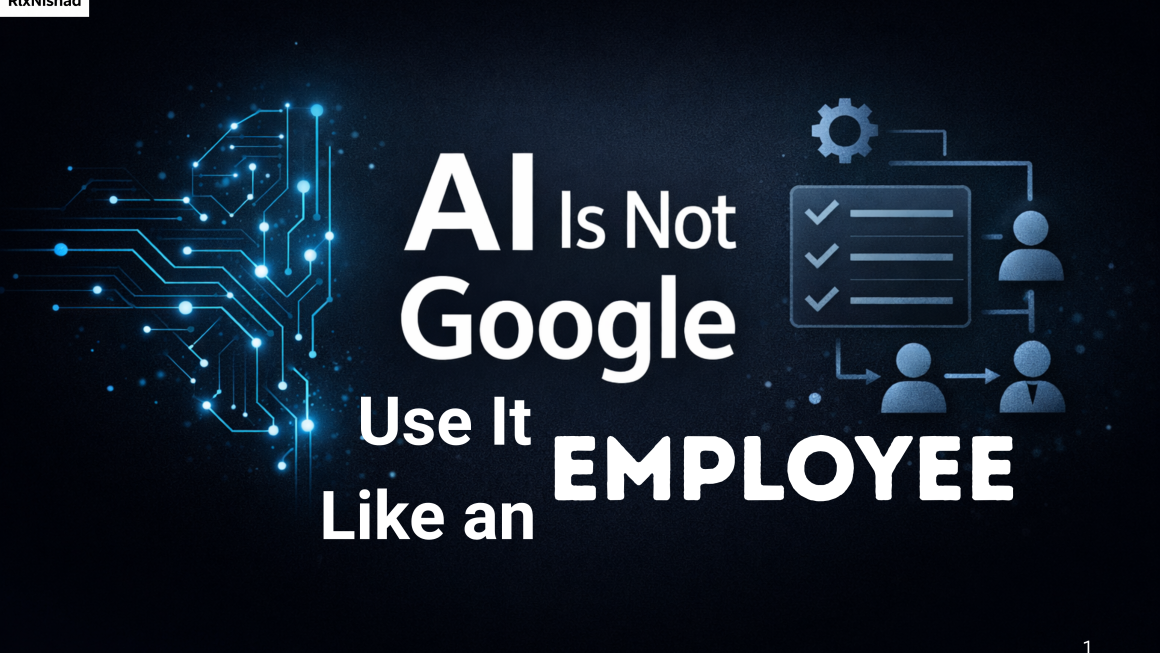
Most founders use AI the same way they use Google to search, ask questions, and get quick answers.
Smart founders use AI like an employee.
That shift doesn’t just save time.
It saves companies.
The Common Founder Mistake
For most founders, AI is a faster search engine.
They use it to:
- Explain concepts
- Write emails
- Generate ideas
- Summarize documents
This is helpful, but limited.
AI becomes a tool, not leverage.
The founder still carries all the thinking, decisions, and execution.
That only saves minutes.
The Smarter Founder Approach
Smart founders stop asking AI questions and start assigning responsibility.
They treat AI like a junior team member.
Examples:
- A research assistant to analyze competitors
- A finance assistant to review cash flow and risks
- A content strategist to plan distribution
- An operations assistant to document workflows
Now AI isn’t just responding.
It’s working independently.
Why This Matters
Startups don’t fail because founders aren’t smart.
They fail because founders are:
- Overloaded
- Distracted by low-impact work
- Forced to make decisions without clarity
Using AI like an employee reduces mental load and increases speed.
One approach saves minutes.
The other saves companies.
Final Thought
AI won’t replace founders.
But founders who learn to delegate thinking and execution to AI will quietly outperform those who don’t.
Not by working harder
but by building smarter systems.
Founder FAQs
Can AI really replace team members?
AI doesn’t replace founders or leadership, but it can handle repeatable tasks and reduce workload when used correctly.
What’s the biggest AI mistake founders make?
Using AI only for searching instead of assigning it ownership and responsibility.
Is this approach useful for early-stage startups?
Yes. Early-stage founders benefit the most because AI reduces the need for hiring too early.